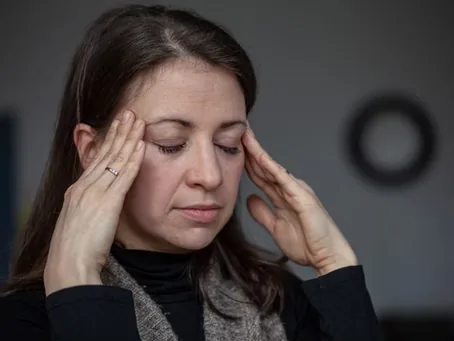
There are seasons in life where it feels like everything is asking something of you, all at once. You're trying to keep up with work, relationships, family responsibilities, social plans, and your own wellbeing. You're managing your home, making big life decisions, and trying to stay on top of it all. And even when you're doing your best, it can feel like you're constantly falling behind.
If you've been feeling overwhelmed lately, you're not alone, and you're not doing anything wrong. Overwhelm isn't a failure. It's often a signal that something needs your attention, care, or adjustment.
Signs and symptoms of feeling overwhelmed
Overwhelm doesn't always look obvious. It can show up mentally, emotionally, physically, and behaviorally.
Mentally: racing or scattered thoughts, difficulty concentrating, trouble making decisions, forgetfulness.
Emotionally: anxiety or constant worry, irritability or frustration, feeling easily triggered, emotional numbness or shutdown.
Physically: fatigue or low energy, headaches or muscle tension, trouble sleeping, restlessness.
Behaviorally: procrastination or avoidance, canceling plans, overworking or overcommitting, difficulty slowing down.
If you're noticing these signs, your mind and body may be telling you that this is too much right now.
Why do I feel so overwhelmed?
Many people feel overwhelmed not just because of what they're carrying, but because of the pressure to carry it all well. There's often an internal expectation to succeed at work, maintain relationships and friendships, support family members, stay socially connected, practice self-care consistently, keep your home clean and organized, and make important life decisions with confidence.
That's a lot for one person to hold. And then life adds unexpected challenges. You might be supporting a sick parent, helping a friend through a difficult time, navigating financial stress, or feeling uncertain about your future.
In these moments, overwhelm makes sense. You're not bad at coping, you're responding to a lot.
Adjusting expectations
Sometimes life throws curveballs that are out of your control. And in those seasons, trying to maintain your usual pace can lead to burnout. Learning how to stop feeling overwhelmed often starts with adjusting expectations. That might look like letting your home be messier than usual, saying no to social plans, delaying non-urgent tasks, or redefining what productive means right now.
You're not failing. You're adapting. You're choosing to prioritize what matters most in this moment.
Even good things can cause overwhelm
Not all overwhelm comes from stress or hardship. Sometimes it comes from good things, like planning a vacation, deciding where to live, or figuring out your next life step. Too many choices. Too much pressure to make the right decision. If you're feeling overwhelmed by big decisions, try to slow the process down. You don't have to figure everything out at once.
Simple, immediate relief
If you're wondering how to reduce anxiety and overwhelm quickly, start small. You don't need a perfect system, you need something doable.
- Focus on one thing at a time. Ask yourself: what is the next small step I can take? Narrow your focus.
- Calm your nervous system. Try a simple breathing exercise. Inhale for four seconds, exhale for six, and repeat a few times.
- Name what you're feeling. Instead of everything is too much, try: I'm feeling overwhelmed right now. There's a lot on my plate. This creates space and clarity.
- Lower your expectations. Ask: what can be good enough today? Not everything needs your full energy.
- Take a pause. A short break, a walk, or a few minutes of stillness can help reset your mind and body.
Finding calm in the chaos
Learning how to deal with overwhelm isn't about doing more, it's about doing things differently. Slowing down. Being flexible. Letting go of perfection. Taking life one step at a time. You're allowed to not have everything figured out. You're allowed to shift your pace. You're allowed to give yourself permission to rest.
Even in overwhelming seasons, there are still small moments of life happening around you. A deep breath. A warm cup of coffee. A quiet moment of stillness. A conversation that makes you feel understood. These micro moments matter. They don't take away the hard, but they remind you that it's not only hard.
If you take anything from this, let it be this: you don't have to do everything today. You don't have to hold everything at once. And you don't have to push through overwhelm alone. Take one step. Then another. That's enough.
If this sounds familiar
We offer a free 15-minute consultation to talk through what you are carrying and whether working together feels like a fit.
Book a consultationThese posts are for education and general information. They are not therapy, not medical advice, and not a substitute for care from a licensed professional, and reading them does not create a therapeutic relationship with Sage Path Counseling Center. If something here lands close to home, please reach out to a licensed clinician. If you are in crisis, call or text 988.